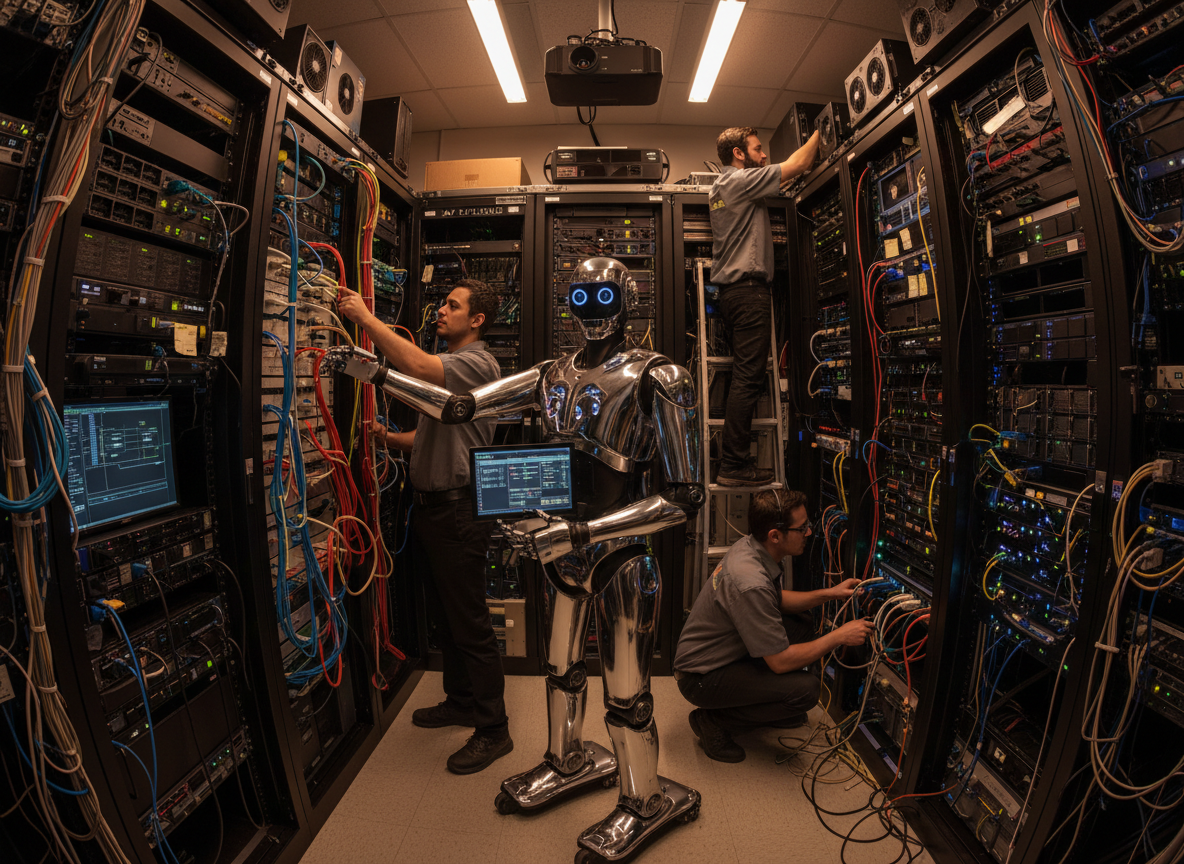
For years, AI in the AV industry sounded like a future promise — something talked about in keynotes and trend reports, but rarely felt on the job site or in day-to-day operations.
Today, AI is quietly reshaping how AV systems are designed, managed, and experienced. Not by replacing AV professionals, but by reducing friction, improving reliability, and making spaces more responsive to the people using them.
Here are three ways AI is already changing AV systems — and where it’s headed next.
1. AI Is Making AV Systems More Self-Aware
What’s happening now:
AI-driven monitoring and analytics are giving AV systems visibility they’ve never had before. Instead of waiting for a failure, systems can now identify patterns that indicate trouble long before users notice.
Examples already in use:
-
Detecting signal degradation or device instability
-
Identifying underperforming microphones, cameras, or displays
-
Monitoring usage trends across rooms and spaces
Why it matters:
This shift moves AV from a reactive support model to a proactive one. Fewer emergency calls. Less downtime. Better planning for maintenance and upgrades.
What’s next:
Expect AI to evolve from detection to recommendation — suggesting configuration changes, flagging rooms that need redesign, and predicting lifecycle replacement timelines with greater accuracy.
2. AI Is Improving the Hybrid Experience
What’s happening now:
AI is already embedded in many collaboration environments, quietly improving the hybrid experience through:
-
Auto-framing and speaker tracking
-
Intelligent noise suppression
-
Real-time audio and video optimization based on room conditions
These tools help meetings feel more natural — without users needing to adjust settings or understand what’s happening behind the scenes.
Why it matters:
AI helps level the playing field between in-room and remote participants by dynamically adapting to how people move, speak, and collaborate.
What’s next:
The next phase will focus on context-aware collaboration — systems that understand meeting intent, participation patterns, and room dynamics, then adjust layouts, audio priority, or content visibility automatically.
3. AI Is Reducing Complexity for End Users
What’s happening now:
One of AI’s most immediate impacts is invisible to users — and that’s the point. Intelligent automation is simplifying workflows by:
-
Automating room setup and shutdown
-
Adjusting lighting, audio, and display behavior without manual input
-
Reducing the number of user-facing controls needed to run a space
Why it matters:
AV systems don’t fail because they lack features — they fail because they’re too complex. AI helps abstract that complexity, allowing people to focus on collaboration instead of control panels.
What’s next:
As AI models mature, expect adaptive user interfaces — systems that change based on who’s using the space, how often, and for what purpose, all while maintaining consistency across rooms.
What AI Is Not Replacing
Despite concerns, AI isn’t replacing AV professionals — it’s reshaping their role.
Design, integration, system architecture, and experience planning still require human expertise. AI handles repetition, pattern recognition, and optimization — freeing AV teams to focus on higher-value work like strategy, innovation, and user experience.
The Bigger Picture: AI as an Enabler, Not a Disruptor
The most important shift isn’t what AI can do — it’s how it’s being applied.
AI works best in AV when it:
-
Enhances reliability instead of adding layers
-
Simplifies experiences instead of complicating them
-
Supports AV teams instead of sidelining them
The AV industry is quality being upgraded by AI. The next few years won’t be about flashy features, but about systems that finally feel intuitive, responsive, and resilient at scale.
Want more bite-sized AV updates like this? Subscribe to our Substack to stay in the know.