October is Fire Prevention Month, a time to focus on fire safety, preparedness, education, and the steps organizations and communities can take to reduce risk.
For fire and rescue teams, emergency management organizations, 911 and dispatch centers, utilities, energy companies, and other critical operations, prevention does not stop at smoke alarms, inspections, or public education. It also means being prepared to make informed decisions when an incident occurs.
That preparation increasingly depends on technology.
Fire Prevention Is Also About Preparedness
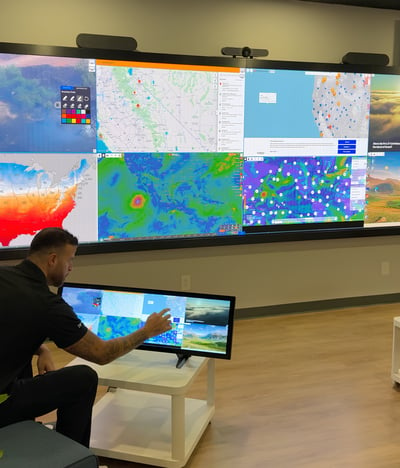
When an emergency begins, the information available to a command team can change quickly. A single incident may involve dispatch information, live camera feeds, maps, weather conditions, unit locations, infrastructure data, evacuation information, and communication between teams in the field.
The challenge is not necessarily a lack of information. It is being able to see and understand the information that matters when decisions need to happen quickly.
This is where command and control technology becomes important.
A well-designed command center can bring information from multiple sources into a shared operational view. Instead of relying on disconnected screens, applications, or individual workstations, teams can build a clearer picture of what is happening and use that information to coordinate a response.
Situational Awareness Starts With the Right Information
During a fire or other emergency, situational awareness can directly influence how teams prioritize resources and respond to changing conditions.
Command teams may need to understand:
- Where is the incident?
- What areas are affected or at risk?
- Where are personnel and resources located?
- What are current weather and environmental conditions?
- Which critical infrastructure is nearby?
- Are evacuation areas changing?
- What information is coming from the field?
- What decisions have already been made?
- What needs to happen next?
Having these sources available is important, but how they are presented matters just as much.
Information that is difficult to find, scattered across systems, or isolated on separate displays can create unnecessary friction during an already demanding situation.
Technology Can Help Connect the Bigger Picture
Modern command centers can use software to bring together information from the systems teams already rely on.
Maps can be displayed alongside live video. Weather information can be viewed alongside incident locations. Unit status can be considered alongside evacuation zones and critical infrastructure.
This creates a shared operational picture that can help teams understand the relationship between different pieces of information.
It also creates a workspace that can evolve as the incident does.
As new information comes in, teams can update the workspace, highlight important developments, document decisions, and keep everyone working from the same information.
The Goal Isn't More Technology. It's Better Decisions.
It can be tempting to approach command center technology by asking how many screens, feeds, or systems can fit into a room.
A better question is: Can the people responsible for making decisions quickly understand what is happening and determine what needs to happen next?
Technology should support that process rather than add another layer of complexity.
The right software can help teams organize information around the way they actually operate, whether that means monitoring an active incident, coordinating resources, protecting critical infrastructure, or maintaining awareness across a large geographic area.
For organizations responsible for high-impact spaces, that distinction matters.
Building Readiness Before the Next Emergency
Fire Prevention Month is an opportunity to look beyond prevention alone and consider how prepared an organization is to respond when prevention measures aren't enough.
That means evaluating more than equipment and procedures. It means looking at the technology supporting the people responsible for making decisions.
-
Are critical systems connected?
-
Can teams access the information they need?
-
Can operators quickly bring different sources of information together?
-
Can decisions and action items be tracked?
-
Can the operational picture adapt as an incident changes?
These are important questions for any organization responsible for emergency response or critical infrastructure.
How T1V Supports Command and Control
T1V develops interactive software for high-impact spaces, including command and control environments where teams need to bring information together and make decisions in real time.
With ThinkHub®, teams can create a shared digital workspace that brings together maps, live feeds, browsers, documents, video sources, and other information within a single interactive environment.
Rather than replacing the systems an organization already uses, ThinkHub can help bring those sources into a workspace designed around the needs of the people using them.
This Fire Prevention Month, we're highlighting the role technology can play in helping command teams see more, understand more, and make better-informed decisions when it matters most.